
Early treatment for children in Halifax
A first check around age seven, when small things are easiest to guide. Catching them at the right time can make room for your child's teeth and, where possible, simplify or even avoid treatment later on.
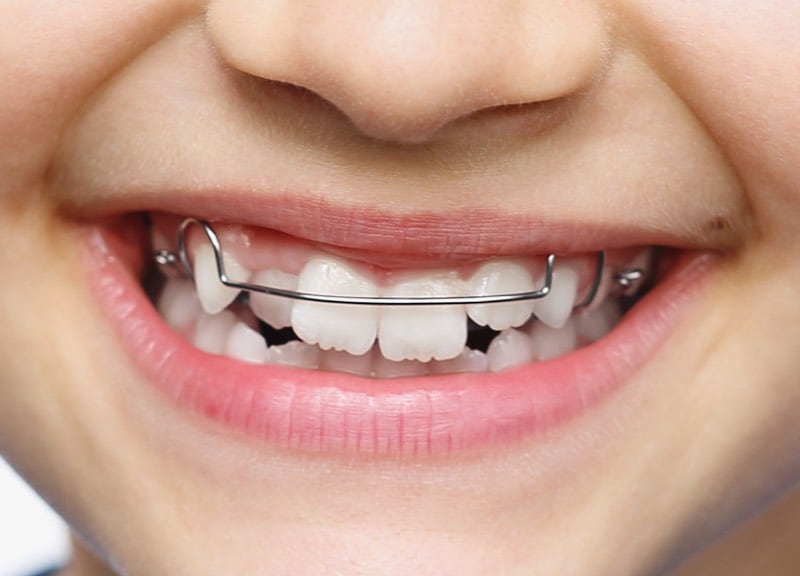
What is early treatment, and does my child need it?
Orthodontists recommend a first check-up as early as age seven, so Dr. Catherine McLeod can evaluate whether treatment is needed. Early treatment, known as Phase One, typically begins around age eight or nine, with any Phase Two starting around age eleven or older. Many children simply need monitoring, not treatment. When that is all that is needed, they can join our free growth monitoring recalls, so we watch how the jaws develop here in Halifax and step in only if and when it will genuinely help.
Guide growth
Working with a child's natural growth can create space for teeth and make later orthodontics simpler.
Simpler later
Guiding growth early can make any later treatment shorter and more straightforward.
Only if it helps
Dr. Catherine McLeod recommends early treatment only when it genuinely helps, and tells you honestly when it can wait.
The 6-Seeds Growth Guidance Program
Plant the seeds for growing healthy, beautiful smiles, starting at age 6. The 6-Seeds Growth Guidance Program is Embrace Orthodontics' personalized early assessment plan, designed to spot orthodontic issues before they grow into larger problems later. Six to twelve months of early interceptive treatment may avoid removing adult teeth and jaw surgery in some cases, and families appreciate the chance to plan ahead if treatment is ever recommended.
Six signs to see an orthodontic specialist at age 6
- Habits that affect jaw growth: thumb-sucking, mouth breathing and snoring
- Jaw growth and bite development that needs guiding, such as an overbite or underbite
- Functional concerns: chewing, speech, or a bite that shifts
- Facial asymmetries and crossbites
- Crowded erupting adult teeth
- Delayed eruption of adult teeth
Every child receives the 6-Seeds Smiles Starter Pack: a seed starter kit, a toothbrush and floss, and an Embrace Ortho Jibbit. And children are invited to bring their favourite stuffy friend to their first visit with us.
Ways we guide a growing smile
The right approach depends on your child. At your free consultation Dr. Catherine McLeod will explain which, if any, is needed.
Palatal expanders
Gently widening a narrow upper jaw to make room for the permanent teeth to come in straight.
Learn moreTwo-phase treatment
A staged plan that guides jaw growth first, then aligns the permanent teeth, for a stable, lasting result.
Growth modification
Guiding how the upper and lower jaws develop while a child is still growing.
Forsus
Correcting larger overbites in growing teens, comfortably and without headgear.
Breathing, sleep and growing jaws
The way a child breathes and sleeps is closely connected to how their jaws grow. A narrow upper jaw can leave less room for the tongue and the nasal airway, and children who mouth breathe, snore or sleep restlessly are worth an assessment. It is one of the six signs in our 6-Seeds program for exactly that reason.
As part of an early check, Dr. Catherine McLeod looks at jaw width, bite development and habits. Where it is appropriate, a palatal expander can gently widen a narrow upper jaw while a child is still growing. We do not diagnose or treat sleep disorders: if anything we see suggests a sleep or airway concern, we will say so openly and work alongside your family doctor or an ear, nose and throat specialist.

Gentle help with habits that affect growth
Prolonged thumb or finger sucking, tongue thrusting and habitual mouth breathing can, over time, affect how a child's teeth and jaws develop. When encouragement alone is not enough, a simple, comfortable appliance can act as a gentle reminder. The approach is always supportive and child-friendly, never a punishment.
Specialist care, made affordable
- Interest-free monthly plans from $149
- 0% interest, with flexible down payments
- We direct-bill most insurance companies
- Your exact fee is confirmed at your free consultation
Your exact fee depends on your case and is confirmed at your free consultation, with no obligation.
Early treatment questions
What age should my child first see an orthodontist?
What is Phase One treatment?
Does every child need early treatment?
Will my child still need braces later?
Wondering if it is time for your child's first visit?
Book a free consultation and Dr. Catherine McLeod will assess your child's growth and tell you honestly whether anything is needed now, with no referral and no obligation.